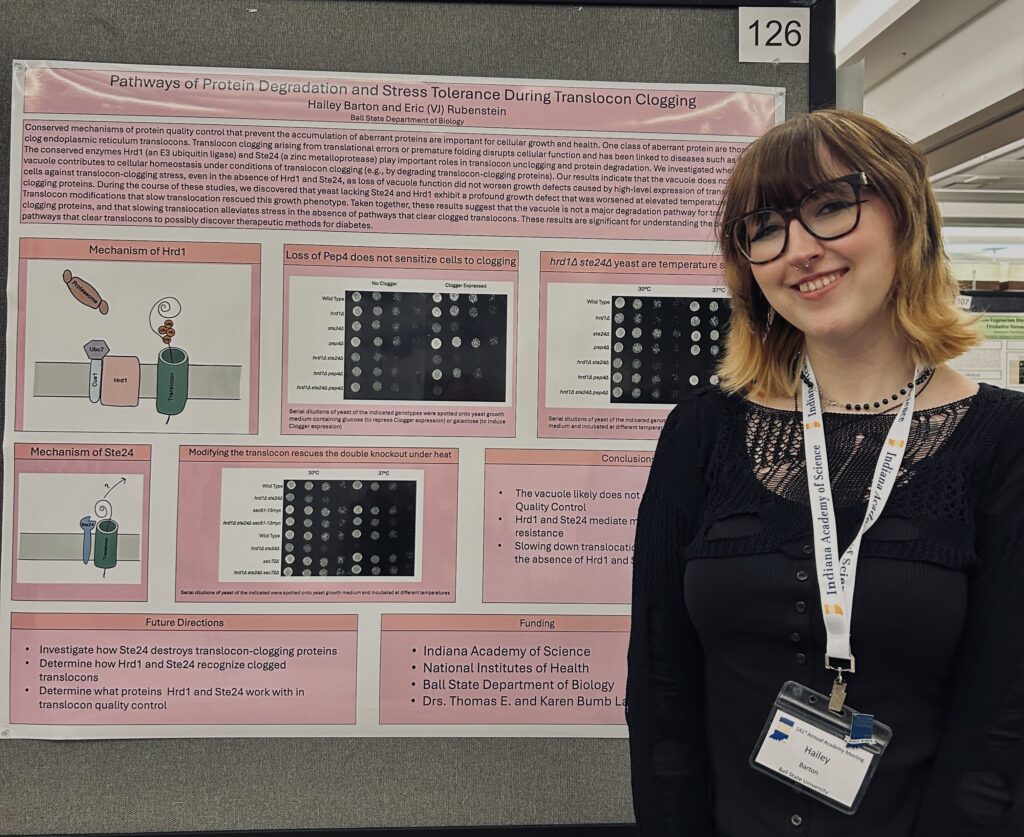
Hailey presenting her research at the Indiana Academy of Science Annual meeting
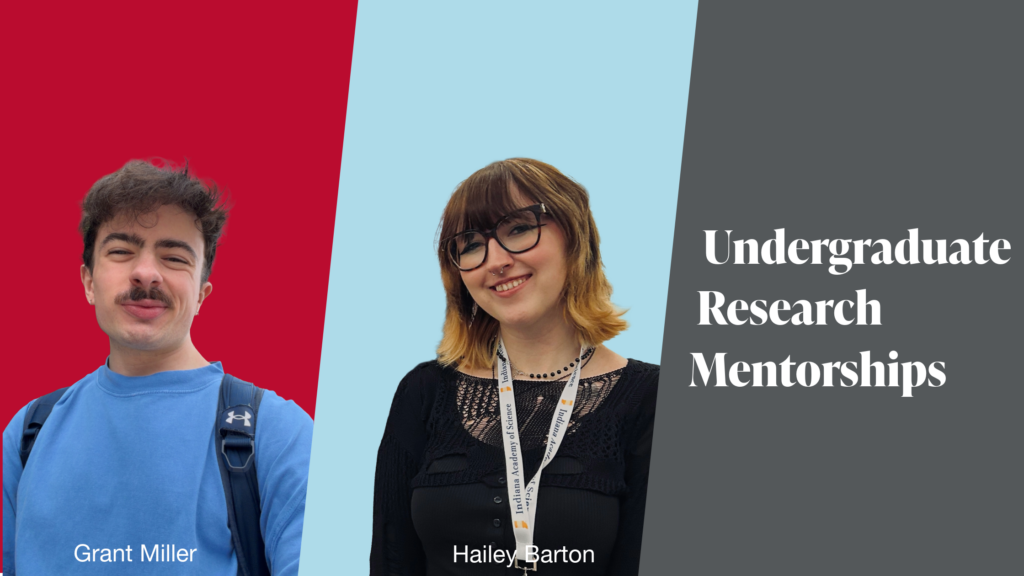
Indiana natives Hailey Barton and Grant Miller originally came into Ball State with different goals. Hailey, from Wabash, chose to major in biology with a concentration in microbiology but was still figuring out where she wanted to head in the future. Grant, from Goshen, double-majored in microbiology and chemistry with hopes of shifting into medicine and becoming a physician. However, both students found projects in Dr. Eric (VJ) Rubenstein’s and Dr. Douglas Bernstein’s labs that captured their interests and altered their pathways. Through the mentorship offered by the faculty and the opportunity to participate in independent research, both students are now seniors, hoping to pursue a future in research.
Hailey joined Dr. Rubenstein’s lab through the Teacher-Scholar program. She focuses on understanding the necessity of proteins for Endoplasmic Reticulum-Associated Protein Degradation (ERAD). She uses different enzymes and substrates to narrow in on the mechanisms used by cells to recognize and eliminate misfolded proteins in the Endoplasmic Reticulum. Understanding this process is vital as ERAD is important for many cellular functions, from maintaining sterol to controlling active calcium channels and can be exploited by viral and bacterial toxins to access a cell’s cytoplasm.
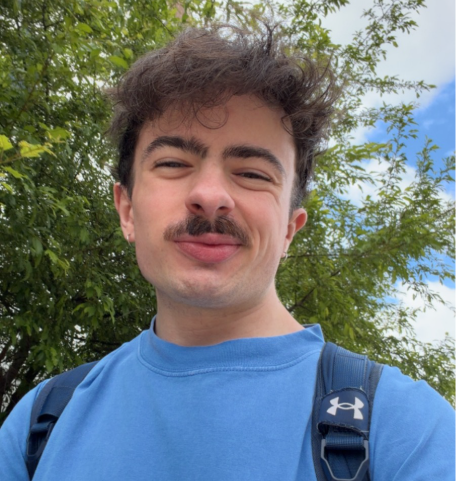
Picture of Grant Miller
Grant works under Dr. Bernstein on understanding the filamentation of Candida albicans mutants to uncover how its genes are affected by certain antifungal compounds. C. albicans is a pathogen that is typically harmless, but in certain conditions, can cause superficial infections, and in people with weakened immunity, serious systemic infections. Understanding the genetics of fungi like C. albicans and identifying how they differ from humans on a molecular level is crucial for more effective antifungal therapeutics.
Hailey and Grant’s stories matter beyond their research. Indiana struggles to retain graduates, especially in STEM-related fields. Faculty-student research mentorships offer a potential answer. When students can find meaningful mentorship, funding, and far-reaching work close to home, they have more reason to build a future here.
Hailey and Grant sought out the labs in hopes of gaining experience that helps their future careers and shows them how conducting research worked. The combination of independence and support offered by the faculty lab environments nurtured their interest in research. They found themselves becoming more involved in academic environments outside of class.
Hailey secured funding from multiple sources for her work. She was supported by the Aspire undergraduate grant to pursue more projects. The experience of applying for grants taught her science writing skills that will help her reach different audiences in the future. The grant also enabled her to pursue more complex projects, which allowed her to develop more depth in knowledge and breadth in research skills.
Grant is the director and section leader of the Organic Chemistry Initiative, where he helps more students get access to resources that set them up for success in organic and biochemistry. He is also a Supplemental Instruction leader of organic chemistry at the Ball State Learning Center and holds out-of-class study sessions with activities and materials that help other students engage with the course. Grant is currently collaborating with Dr. Bernstein on a research paper.
Both Hailey and Grant encourage other students to find research opportunities. “It has been a great experience to have someone like Dr. Bernstein whom I can ask questions about our work, writing research papers, and preparing for graduate school,” Grant says. Hailey agrees. “After two years of working in [Dr. Rubenstein’s] lab, I have gained so much confidence and passion. Finding my purpose, my people, and a truly great mentor was the best thing that happened to me at Ball State.”
Hailey hopes to pursue graduate education to further explore her research interests, and Grant hopes to pursue a PhD in Chemical Biology or Organic Chemistry with the goal of working in pharmaceutical research. These faculty-undergraduate mentorships have enabled not only impactful research but also researchers who have the potential to impact their fields.