Sponsored Projects Administration’s Aspire Internal Grant
program is honored to recognize the awardees of the Proposal Enhancement Grant (PEG). This internal grant opportunity aims to support tenured and tenure-line faculty as they work to enhance preliminary research or scholarly projects with the goal of engaging with an external funding agency through a competitive grant proposal. In November 2025, Aspire reviewed applications from pre-tenure faculty members. After reviewing many quality proposals, the committee awarded Dr. Tengfei Ma, Assistant Professor of Public Health; Dr. Brittany Acquaviva, Assistant Professor of Criminal Justice; Dr. Sarah Harry, Assistant Professor of School Psychology; Dr. Somanita Kheang, Assistant Professor of Educational Studies; and Dr. Jiyeon Lee, Assistant Professor of Early Childhood, Youth, and Family Studies.
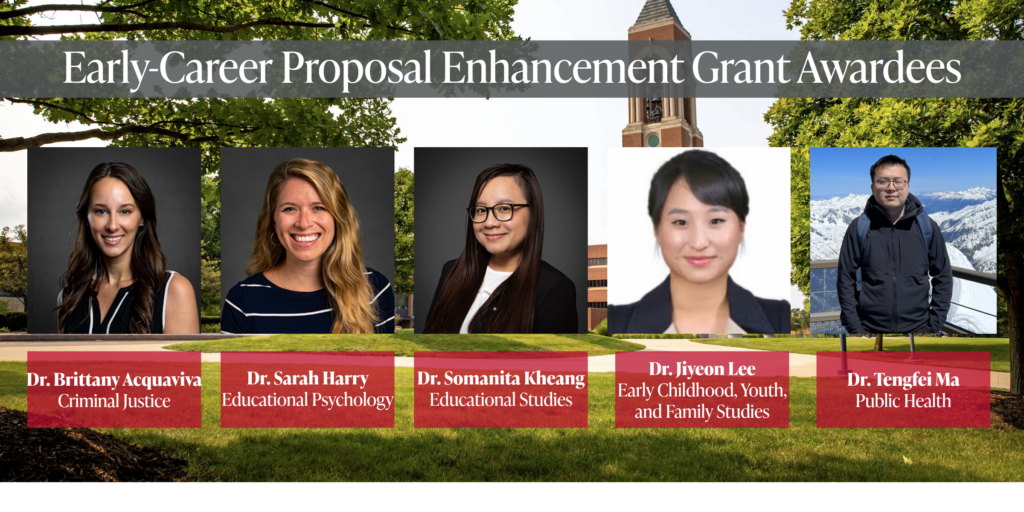
These early career faculty are conducting research in a variety of areas from the connection between early-life nutrition, gut microbiome function, and child sleep health to how different methods of contact affect victim cooperation in intimate partner violence. For some faculty, this is their first time receiving funding for their research, while others are seasoned grantseekers. One of the goals of the Aspire Internal Grant program is to provide Ball State faculty and students a stepping stone as they prepare to seek out larger, external grant funding. These internal grants, like the Proposal Enhancement Grant, allow researchers to fund some of the preliminary phases of their research, like data gathering, coding, or transcription, among other elements of their projects, in preparation of external proposal or publication submission. The ultimate aim of the program is to help these principal investigators further expand their research into national or industry-specific opportunities.

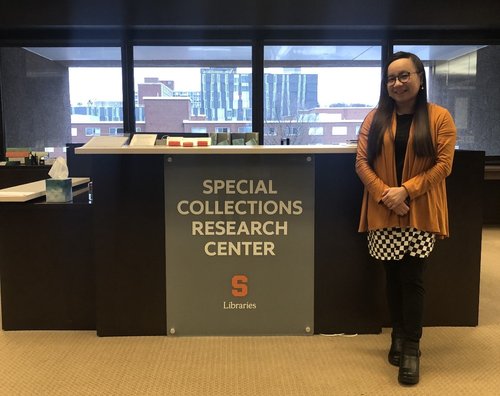
Dr. Somanita Kheang, for example, has a longer-term goal of utilizing the outcomes from her PEG-funded research to expand into a larger multi-institutional study aimed at systemic change in higher education. She shared that her project “investigates how research universities in the Midwest can better support at-risk adult learners, particularly first-generation, low-income, and working students, who face systemic barriers to degree completion.” The PEG will allow her to “conduct essential pilot data collection, including virtual interviews and in-person focus groups across three Midwestern research universities,” she says. This preliminary research will allow her to develop a practical, evidence-based framework from which to guide universities to better support their at-risk adult learners. She aspires to submit her findings for publication in peer-reviewed journals and present at academic conferences like the one pictured below.

Dr. Brittany Acquaviva also plans to utilize the PEG funding to support data coding, management, and preliminary analyses in her project, “Evaluating Victim Cooperation for Intimate Partner Violence Cases Processed at the Delaware County Prosecutor’s Office.” Dr. Acquaviva shares that she will be using “case-level data from 2018-2024 to evaluate individual, case, and organizational factors associated with victim engagement through the legal process.” By examining how communication methods like “phone [calls], in-person [communication], and text messaging affect victims cooperating in intimate partner violence cases,” Dr. Acquaviva hopes to provide “the pilot findings needed to justify expanding the evaluation of processing other sensitive cases.” While this is not her first internally funded project, she says her hope is that the support from this award will allow her to “position the project for competitive external funding opportunities” in the future.

Project proposals for PEG vary in size and scope, with funding available of up to $12,500 per project. Each project’s needs are different, so submitting a clear budget and budget narrative is essential. The funding can be utilized for summer stipends, student support, supplies, equipment, expenses, or travel. One of the unique aspects of Dr. Tengfei Ma’s project is support for metatranscriptic sequencing. He shares that his multi-omics analysis project “will assess the interplay between early-life nutrition, gut microbiome, and child sleep health.” He will collaborate with colleagues at Michigan State University’s Genomics Core Facility to conduct the necessary sequencing. Dr. Ma, a first-time awardee, says that he is striving for this project “to result in one to two high-quality, peer reviewed publications” in the short-term and to “provide critical preliminary data to support a competitive NIH R01 application” in the future.

Dr. Sarah Harry plans to use the award to hire graduate student support, fund a project-planning course release, and pay for necessary supplies for data collection. Her project, “An Investigation of Emergent Literacy Outcomes in Preschoolers Through Targeted Interventions,” will allow her and her team to assess if new, popularized reading programs from companies like Lovevery offer added value in comparison to established strategies from established reading research centers. The PEG represents Dr. Harry’s first time receiving funding for her research. She shared that she believes her project “will have implications on what reading strategies are promoted and how to encourage more equitable practices for preschool settings.”

Along the lines of research in prekindergarten settings, Dr. Jiyeon Lee is utilizing the award to explore how families and providers in East Indiana adapt to shifting prekindergarten policy changes. The funding, Lee shares, “will clarify how both families and providers respond to reduced funding, increasing closures, and inequitable access” of prekindergarten. By understanding how families and providers navigate these challenges, Lee says the study “will generate actionable knowledge bridging scholarship, policy, and practice, supporting equitable and sustainable early education for all Hoosier children.”
Sponsored Projects Administration is excited to see how the funding through the Aspire Internal Grants program will aid in shaping the academic and research careers of these faculty. There are a variety of internal grants available through Aspire, both for students and faculty members, to help fund research projects. Tenured faculty have the opportunity to apply for their round of funding for PEG during the Spring 2026 semester. Applications are due by February 1.