What if feeling like an “impostor” wasn’t a weakness, but a turning point?
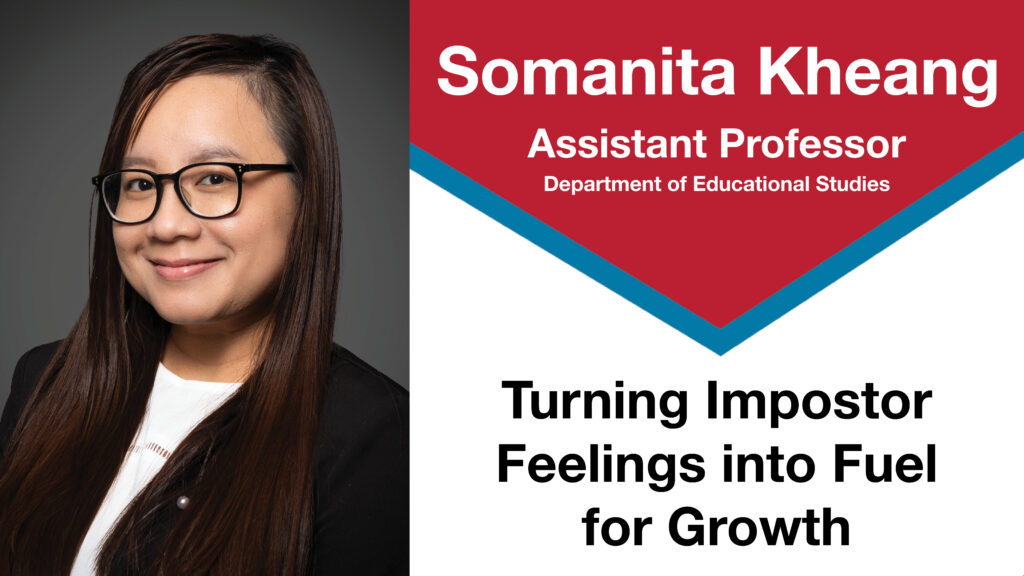
That’s one of the powerful questions guiding the work of Dr. Somanita Kheang, Assistant Professor in the Department of Educational Studies at Ball State University.
Her research begins with a clear and urgent focus:
“How can we create more equitable and empowering learning environments for adult learners, particularly those who are often underrepresented, such as non-traditional, international, and online doctoral students?”
In an era when more adults are pursuing advanced degrees, often online, often while working full-time, this question matters more than ever.
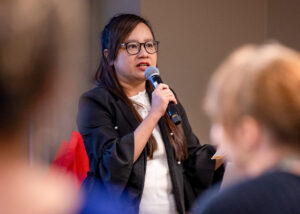
Making the Doctoral Experience More Human
Dr. Kheang studies adult learning through three key lenses:
- Andragogy — how adults learn best
- Transformative learning — how powerful experiences shift perspectives
- The impostor phenomenon — the persistent doubt that you don’t belong
But for her, these aren’t just academic buzzwords.
“These aren’t just abstract concepts; they are vital to understanding and improving the real-world experiences of students in our fully online programs.”
Many doctoral students quietly wrestle with self-doubt, especially those who are first-generation scholars, international students, or balancing multiple roles. Dr. Kheang’s research reframes that experience.
“My work examines how feelings of being an ‘impostor’ can, with the right support, actually catalyze growth and self-awareness, rather than hinder it.”
Instead of asking students to “push through” insecurity alone, her work asks institutions to build systems of belonging around them.
 Scholarship That Travels
Dr. Kheang’s research is making an impact nationally and internationally.
Her recent publications include:
- “Impostor Phenomenon and Identity Transformation Among Asian Nontraditional Doctoral Students,” published online-first in the Journal of Transformative Education
- “Application of Andragogy with Graduate Students,” forthcoming in The Currere Exchange Journal
- A 2025 book chapter on lifelong learning for rural adults in Thailand and Cambodia
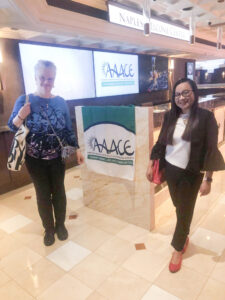
She regularly presents at national conferences such as the American Association for Adult and Continuing Education and the Adult Education Research Conference, contributing to conversations shaping the future of adult and higher education.
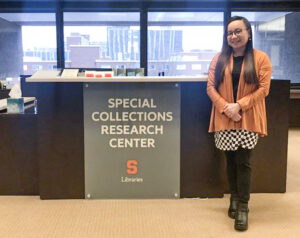
In 2024–2025, she received the competitive Alexander N. Charters Adult Education Grants-in-Aid award, which supported a research residency at Syracuse University Libraries. Her public reflection, “Exploring the Legacy of Andragogy,” brought that scholarship beyond academia and into public dialogue.
 A “Virtuous Cycle” of Teaching and Research
One of Dr. Kheang’s biggest professional insights? Research, teaching, and leadership shouldn’t live in separate lanes.
“Early on, I recognized that my passion for research, my dedication to teaching, and my leadership in the EdD program couldn’t exist in silos without sacrificing depth.”
Instead, she intentionally connects them.
“This hasn’t just been about balance; it’s been about creating a virtuous cycle where each role strengthens and enlightens the others.”
Her research informs how she mentors doctoral students. Her advising conversations spark new research questions. Each role fuels the other.
 Mentoring That Makes a Difference
For Dr. Kheang, the most meaningful outcomes aren’t just publications, they’re people.
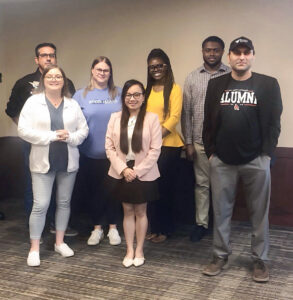
She is currently co-authoring with doctoral advisee Innocent Ugochukwu on a paper accepted for the 2026 Adult Higher Education Alliance Annual Conference. She is guiding Rachel Campbell through a pilot study and conference proposal exploring women, community, and relational rupture. She is also supporting several additional doctoral students in developing work for peer-reviewed publication.
Since joining Ball State in Fall 2024, she has served on four dissertation committees for students who have successfully defended and graduated.
And it’s those moments of transformation that matter most.
“There is an incredible joy in those ‘aha’ moments – when a student refines a research question, masters a methodological hurdle, or finds their unique academic voice.”
Of course, many doctoral students are balancing careers, families, and academic rigor. Supporting them requires flexibility, structure, and deep empathy. But for Dr. Kheang, that work is worth it.
 The Joy of Belonging
When asked what brings her the most joy, her answer comes back to growth and connection.
“The greatest joy springs from witnessing tangible growth and fostering genuine community.”
Sometimes that joy looks like a conference acceptance email. Sometimes it’s a successful dissertation defense. Sometimes it’s a student writing: “I really felt like my professor cared how I was doing.”
At its heart, Dr. Kheang’s work is about designing learning environments where students don’t just survive doctoral education, they grow, transform, and thrive.
By turning theory into practice and doubt into development, she is helping ensure that every adult learner at Ball State has the opportunity not only to succeed, but to belong.
Comments: