
The previous post distinguished between graduating on time and graduating early. Students with pre-college credit were more likely to graduate within four and six years, but early graduation was concentrated among those who entered with relatively large amounts of credit.
That distinction matters when considering cost. Does entering with pre-college credit reduce what students pay to earn a Ball State degree?
The findings suggest that it can, but the cost advantage was most evident among students who entered with higher credit totals. Students with small or moderate amounts of pre-college credit generally had net tuition costs similar to those of students entering without credit.
How was net tuition cost measured?
For this analysis, net tuition cost was defined as mandatory resident tuition and fees minus federal, state, and institutional gift aid. Students whose gift aid exceeded their tuition and required fees were assigned a net tuition cost of $0 rather than a negative amount.
This measure focuses on the tuition and fee amount remaining after grants and scholarships. It does not represent the full cost of attending college, which may also include housing, food, books, transportation, and other expenses.
The analysis was limited to Indiana residents who graduated during the 2024–25 academic year. The findings therefore describe differences among graduates rather than the expected cost for all incoming students.
Students with more pre-college credit generally had lower costs
The descriptive results showed that net tuition cost generally declined as pre-college credit increased. The pattern was not perfectly consistent across every credit group, but students entering with higher credit totals tended to have lower net tuition costs than students entering with little or no credit.
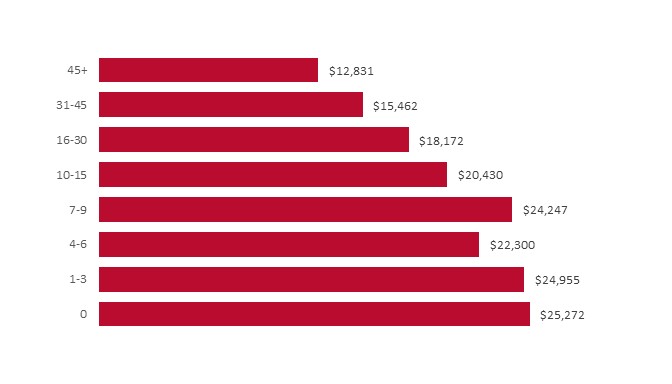
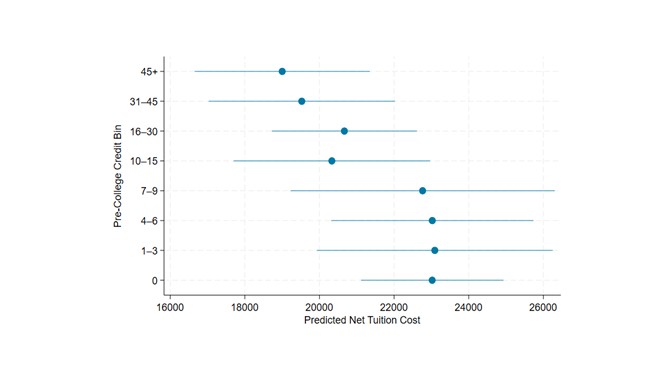
As in the earlier analyses, some of this difference reflected characteristics students brought with them to Ball State. Students with larger amounts of pre-college credit often had stronger high school academic records and differed from other students in ways that could also be related to college costs and financial aid. After accounting for these differences, the relationship became more modest. Predicted net tuition costs were relatively similar among students in the lower credit groups. Lower costs became more apparent among students who entered with larger amounts of pre-college credit.
Rather than showing that every additional pre-college credit produced a corresponding reduction in cost, the findings suggest a threshold pattern. Meaningful cost differences appeared mainly at higher credit totals.
So, does pre-college credit lower the cost?
Students entering with larger amounts of pre-college credit generally had lower net tuition costs, even after accounting for differences in academic preparation, student background, and high school context.
The same pattern was not clear among students with smaller credit totals. A few completed courses may provide flexibility or help students make progress without reducing the number of semesters they attend. Cost savings were most evident when students brought enough credit to shorten their path to a degree.
Pre-college credit may therefore lower the tuition and fee cost of earning a degree, but some credit does not necessarily produce substantial savings. The amount of credit and whether it helps accelerate graduation both appear to matter.
Beyond this blog series
This post concludes our series on pre-college credit. We’ve covered four questions:
- How much pre-college credit do incoming first-year students bring to Ball State, and which students are most likely to enter with it?
- Does pre-college credit help students succeed in the first year?
- Does pre-college credit help students graduate, and does it help them graduate sooner?
- Does pre-college credit lower the cost of earning a degree?
The full report includes additional analyses and more insights. It examines whether the relationship between pre-college credit and student outcomes varied by student characteristics (e.g., first-generation status) and credit type (i.e., AP vs dual vs both). The report also connects the Ball State findings to prior academic and state research and identifies several directions for future research.
Discover more from Data Insider
Subscribe to get the latest posts sent to your email.