

Reducing the time it takes to earn a degree is a priority for students and universities alike, impacting retention, cost, and student success. Many Ball State students arrive with transfer credit, whether from high school dual-enrollment or another college, hoping those credits will reduce their time of graduation. Does transferring more credits ultimately help students graduate faster?
A recent analysis from Ball State’s Office of Institutional Research and Decision Support (IRDS), an extension of a Data Literacy Institute (DLI) project, tackled this question by examining 7,461 full-time undergraduates who graduated between Fall 2020 and Summer 2024. The findings may be surprising: factors like financial need and first-term performance were more powerful influences on time-to-degree than the sheer number of credits transferred.
Pell and First-Term GPA Mattered More Than Credit Count
Intuitively, one might expect that a student who transfers in a large number of credits would finish college faster. Indeed, the number of prior credits a student transferred was a statistically significant factor, but its effect was minimal. Simply transferring more credits didn’t necessarily accelerate graduation in a meaningful way. Even after accounting for how well those credits applied to a student’s degree requirements (versus just counting as electives), the impact of credit count on time-to-degree remained small.
In contrast, other factors stood out as stronger predictors of how long students took to graduate.
Two factors in particular, Pell Grant eligibility (a proxy for low-income status) and first-term GPA, were consistently the strongest predictors of time-to-degree for both first-time freshmen and transfer student graduates. In this Ball State data, these factors outweighed the influence of total transfer credits.
Students who performed well early on, reflected by a higher GPA in their first semester, tended to finish about half a term sooner on average than those who struggled academically in the first term. Conversely, students with financial need (Pell-eligible) generally took longer to graduate, especially among transfer enrollees.
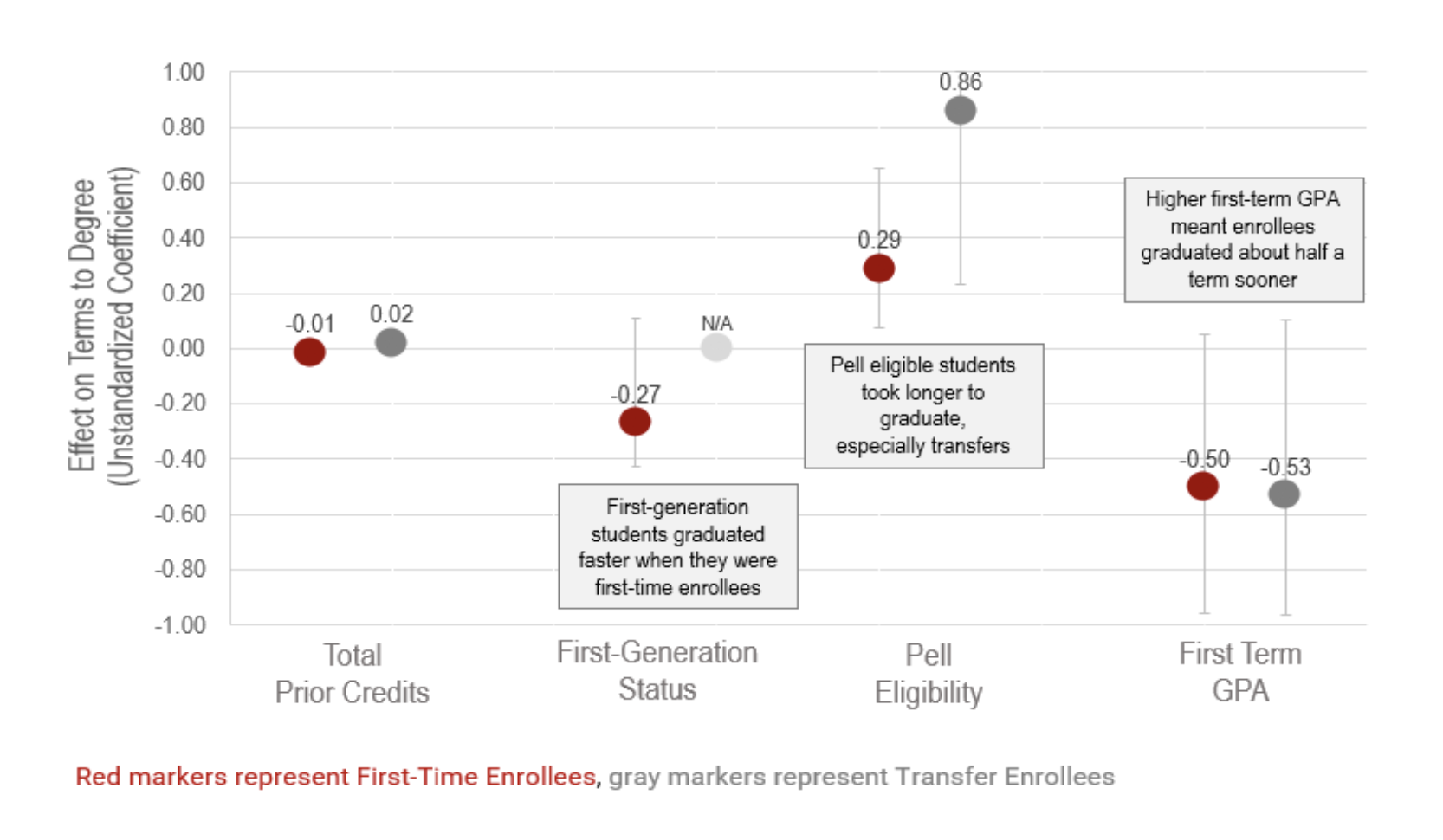
In short, strong early academic performance and minimal financial constraints had a stronger relationship to faster graduation than did the number of credits transferred by the student.
These findings underscore that academic and financial readiness were more predictive of graduation timing than credit accumulation alone. A student who was well-prepared and financially supported was more likely to graduate in fewer terms, while a student carrying heavy financial burdens or early academic struggles may have still experienced delays regardless of how many credits they transferred.
This insight aligns with other student success patterns observed at Ball State: for example, lower-income and first-generation students tended to have slightly lower retention rates into their sophomore year compared to their peers.
Note: On average, Ball State transfer students in this analysis brought in around 50 credit hours, while first-time enrollees transferred about 14 from high school programs. But not all credits were equal: the typical transfer student saw only about 37 of those credits apply directly to their degree requirements, and first-time students saw about 13 of 14 apply.
First-Generation Students Showed Faster Completion in Multiple Contexts
Among Ball State students who graduated, first-generation enrollees completed their degrees in fewer terms than their continuing-generation peers in more than one context.
First-time enrollees who were first-gen graduates graduated significantly sooner than continuing-gen graduates. A second advantage appeared among first-gen graduates who transferred a high volume of credits (roughly more than 30). In this group, first-generation students graduated significantly faster on average than continuing-generation peers with similar transfer loads. For students who transferred fewer credits, the difference was minimal.
Why might first-generation students benefit more from transferring a large number of credits? Those who do so may be especially proactive, motivated, or intentional about their academic planning. They might maximize dual-credit opportunities or carefully select transfer coursework that aligns with their major. Whatever the cause, this pattern suggests that large credit transfers can offer a structural advantage that helps first-gen students catch up or leap ahead.
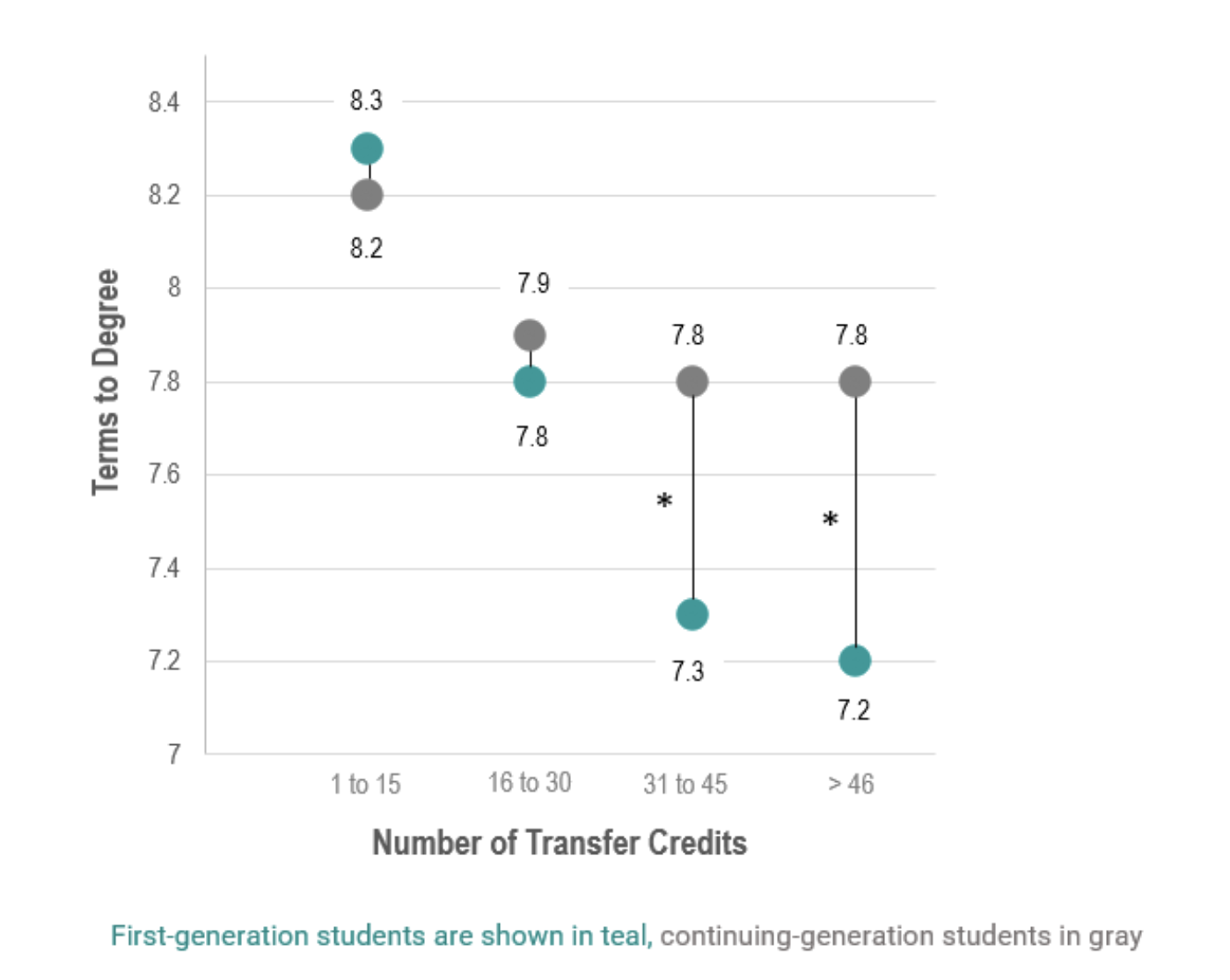
From an institutional perspective, this is encouraging: helping first-gen students earn and transfer more credits (through dual credit accumulation, targeted advising, etc.) could support timely graduation for that population.
Overlapping Identities Revealed Time-to-Degree Gaps
The project also showed that student characteristics can’t be understood in isolation. The relationship between first-generation status and Pell eligibility was especially revealing.
Among first-time students, every combination of generation status and Pell status showed significantly different average times to degree. A student’s outcome depended on the intersection of those factors, not just one.
The most striking comparison was between two groups:
- Fastest: First-generation students who were not Pell-eligible graduated in about 7.7 terms on average (3.8 years)
- Longest: Continuing-generation students who were Pell-eligible graduated in about 8.4 terms on average (4.2 years)
The other two groups fell in between.
This pattern highlights that neither first-gen status nor Pell status alone fully explains time-to-degree. A first-generation student with financial security may graduate sooner than expected, while continuing-generation students facing financial challenges may experience delays. Low-income status can extend time-to-degree even when students come from college-educated families.
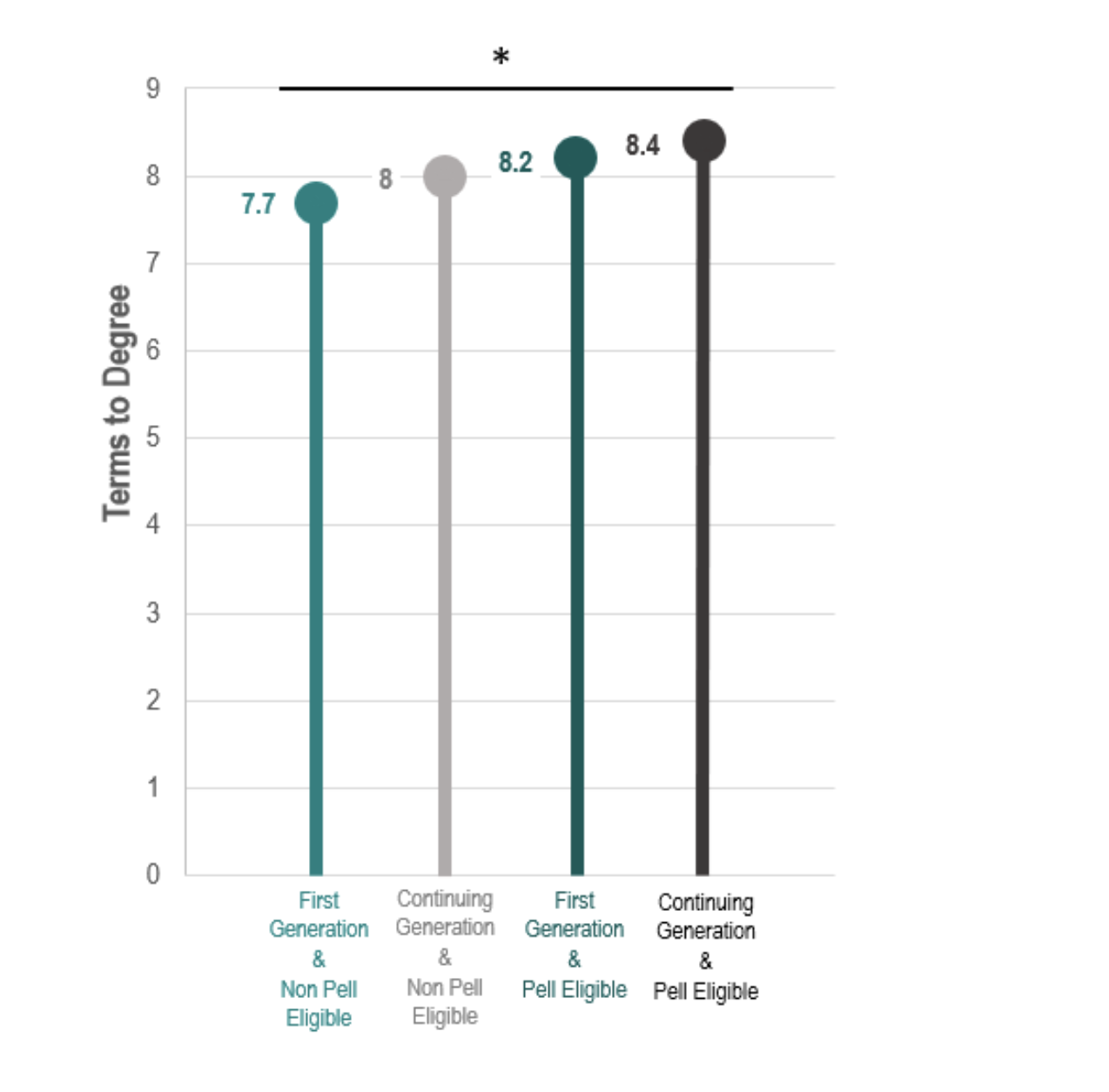
The data underscores the need for an intersectional lens: support services must account for how socioeconomic status, family educational background, and early academic preparation interact to shape student outcomes.
Looking Ahead
These findings offer valuable guidance for improving student success at Ball State:
- Support first-term academic success. Early performance matters. Tutoring, early alerts, and well-designed first-year programming can help keep students on track.
- Addressing financial barriers. The strong role of Pell eligibility suggests that increased aid, financial counseling, and targeted support for low-income students, especially transfer students, could help shorten time-to-degree.
- Promote strategic use of transfer credits. Ensuring that transfer credits apply directly toward degree requirements is key. Proactive guidance and clearer pathways can help students bring in credits that actually count.
Above all, this study highlights that context matters. Students aren’t just “first-gen” or “transfer” or “Pell-eligible.” They may be all of those or none, and their experiences are shaped by the combination of these identities.
This project reflects how IRDS, in partnership with the Data Literacy Institute, continues to explore these nuances to support data-informed decision-making across campus. Each insight moves us closer to ensuring every Ball State student has a clear path to the finish line.
This analysis was part of IRDS work with DLI Advisory Groups on transfer credits and time-to-degree. Readers are encouraged to explore other Data Insider posts for related insights, including studies on sophomore retention and student success gaps.
If you have questions about the program or would like to propose a topic for an Advisory Group study, contact us at irds@bsu.edu.
Discover more from Data Insider
Subscribe to get the latest posts sent to your email.