
For Burris Laboratory School senior Alexandra Yakos, an internship with the Muncie Fire Department is revealing what it takes to work in emergency medicine and how lessons learned in a dance studio can make a difference far beyond the stage.
When an emergency call comes in, every second matters. First responders must assess the situation, make critical decisions, and work together to provide care, often while helping patients and families navigate some of the most difficult moments of their lives.
For Burris Laboratory School senior Alexandra Yakos, witnessing that combination of skill, teamwork, and compassion has been one of the most valuable parts of her internship with the Muncie Fire Department.
“We see people in some of the worst times of their lives,” she said. “Everyone’s situation is different and you never know what each day will bring.”
What has stayed with her most is how first responders balance the medical and human sides of their work.
“They are able to calm and comfort a patient while still taking care of their medical needs.”
It’s a lesson that resonates with Alexandra, who has spent years discovering the importance of patience, encouragement, and compassion in a very different setting: a dance studio filled with preschoolers.
Though the two environments might seem worlds apart, both are helping her prepare for a future dedicated to caring for others.
Finding Her Place in Emergency Medicine
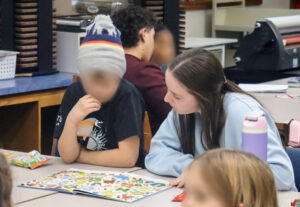
Alexandra has always imagined herself working in healthcare. Finding the right path, however, has taken some exploration.
Her interest in emergency medicine grew after she became a lifeguard a few years ago. She especially enjoyed the training that prepared her to recognize emergencies and respond when someone needed help.
Eager to build on that experience, she enrolled in an emergency medical technician (EMT) training program to prepare for certification. The coursework introduced her to emergency care and reinforced her desire to pursue a medical career.
Her next step brought her into the field through a Graduation Pathways internship with the Muncie Fire Department.
Rather than simply learning about emergency services in a classroom, Alexandra now has opportunities to observe the professionals who provide that care every day.
She participates in ride-alongs with emergency medical services (EMS) personnel, visits fire stations, and helps with the behind-the-scenes work that keeps ambulances ready to respond. That includes checking supplies, monitoring expiration dates, and restocking equipment.
The department’s leadership and personnel have made a lasting impression on her.
“The chief has been very welcoming and has made an effort to help me grow by allowing me to visit the different fire stations, participate in activities, and go on ride-alongs,” she said.
Just as meaningful has been the willingness of firefighters, EMTs, and paramedics to include her in their daily work.
“One of the things I have appreciated most is how welcoming and inclusive the entire EMS/Fire team has been,” Alexandra said. “They have made me feel like part of the team and have been willing to share their knowledge and experiences with me.”
More Than an Emergency Response
Before her internship, Alexandra understood that emergency medicine required teamwork. What she hadn’t anticipated was just how closely first responders depend on one another.
At the fire stations, crews spend long shifts together, building relationships that extend beyond individual emergency calls. Even personnel assigned to different stations regularly collaborate.
“It is never just one person’s job; everyone has a role, and they work together to get things done,” she explained.
She has been particularly interested in the working relationship between EMTs and paramedics. Effective care requires more than knowing how to perform a procedure. Partners must understand one another’s habits, anticipate needs, and communicate under pressure.
“A good relationship ultimately impacts patient care,” she said. “It reinforces just how much trust and teamwork are involved in emergency medical services.”
Alexandra has also discovered that nearly every call can become a learning opportunity.
The professionals she accompanies explain their decisions, demonstrate techniques, and help her understand why certain approaches work best in different situations. Their willingness to teach has encouraged her to ask questions and pay close attention.
“I have learned more than I ever imagined I would going into this experience,” she said.
Those experiences have also changed how she thinks about the responsibility of caring for patients.
She has learned that emergency responders must follow established policies and procedures, maintain professionalism, and remain focused even in stressful circumstances. Personal feelings and distractions cannot interfere with the care someone needs.
The department’s close-knit culture has shown her how that responsibility is shared.
“The family-like dynamic they have built is one of the most surprising but also one of the most wonderful aspects of this experience,” she said.
The Lessons of Little Eyes
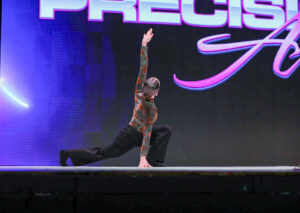 Long before Alexandra began riding along on emergency calls, another group was teaching her lessons about responsibility and leadership.
They were much younger, considerably smaller, and often more unpredictable.
Alexandra has been a competitive dancer since she was three years old. About four years ago, she was offered the opportunity to assist with a preschool dance class at Premiere Dance Center.
Initially, she wasn’t sure she was ready.
Aside from occasional babysitting, she had little experience working with young children. And as she quickly discovered, helping manage a room of 10 to 15 preschoolers was nothing like caring for one or two children at a time.
“Every class was unpredictable and kind of crazy,” she recalled in Little Eyes, an essay she wrote for a college application. “You never knew what they were going to say or do, and they kept me on my toes.”
But something changed as she spent more time with the children.
She watched shy dancers develop confidence, energetic preschoolers learn patience, and students who initially struggled with a step eventually master it.
After her first year, she had fallen in love with teaching the “littles,” as she affectionately calls them.
Today, she teaches dance at Premiere Dance Center, where her young students have given her a new understanding of what it means to be a role model.
“I always had little eyes watching me,” she wrote. “The children aren’t just learning dance steps; they are watching how I handle mistakes, speak to others, and treat every student with kindness and encouragement.”
That realization changed the way Alexandra approached both teaching and taking her own dance classes.
She became more conscious of how she responded to frustration, treated others, and encouraged students who doubted themselves. She wanted to demonstrate the qualities she hoped her dancers would develop.
“Leadership isn’t about being the loudest person in the room; it’s about setting an example that others want to follow,” she wrote.
Some of her favorite moments happen at the end of a dance season.
Children who began the year in tears, reluctant to leave their parents or frustrated by difficult steps, eventually take the stage with confidence. After performing, they rush toward her for hugs.
She also treasures the enthusiastic cries of “Miss Ali, Miss Ali!” whenever she enters the studio.
What began as a chance to help teach dance has become one of the most meaningful experiences of her life.
“Those little eyes taught me as much as I taught them,” she wrote. “They helped me grow into a more patient, responsible, and compassionate person.”
For Alexandra, those lessons connect directly to her future in medicine.
Whether she’s encouraging a nervous preschooler or observing a first responder comfort a patient, she recognizes the difference a caring, reassuring presence can make.
A Burris Education Beyond the Classroom
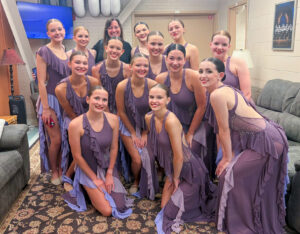 Alexandra’s willingness to explore new opportunities reflects a school experience that has stretched from kindergarten through her senior year.
She proudly considers herself a Burris “K-12er,” a term students use for those who have attended Burris Laboratory School since kindergarten.
Over those years, she has taken advantage of opportunities to challenge herself academically, serve her school, and become involved in the wider community.
She has served as a class officer since her freshman year and participated in Student Council, including serving as vice president during her junior year. She is also a Burris Ambassador, participating in community volunteer activities, and a member of the Delaware County PRIDE Team.
In the classroom, Alexandra has pursued challenging coursework in science, mathematics, and STEM, including dual-credit, college-level, and Advanced Placement courses.
Those academic experiences have helped her develop the critical thinking, problem-solving, and time-management skills she expects to need in college and in healthcare.
“Having access to these opportunities while still in high school has allowed me to explore my academic interests, challenge myself, and feel more prepared for the transition to college-level coursework,” she said.
Her internship has added another dimension to that preparation, allowing her to connect academic learning with professional responsibilities and see potential career paths firsthand.
Taking the First Step
As Alexandra approaches graduation, she is considering colleges that can help her achieve her goal of becoming a physician assistant, possibly specializing in emergency medicine or pediatric oncology.
Her time with the Muncie Fire Department has introduced her to professionals who view EMS as a lifelong career and others who have used it as a foundation for different roles in healthcare.
Seeing those possibilities has made her even more enthusiastic about what comes next.
But like many high school seniors, Alexandra is also navigating the practical challenges of preparing for college.
Acceptance letters have begun arriving, bringing excitement along with difficult decisions. She is researching programs, weighing the financial commitment of college, and applying for scholarships while balancing her senior-year responsibilities.
“I’ll be honest, balancing all of this during my senior year can be a little overwhelming at times, but I know it will be worth the effort,” she said.
For younger Burris students who may be hesitant to pursue an internship or another hands-on experience, Alexandra has a message shaped by her own willingness to try something unfamiliar.
“My advice would be not to be nervous or afraid to ask,” she said. “Do some research to figure out who you need to contact and then take that first step.”
She encourages students to make connections, use available resources, and remain persistent even when an initial attempt doesn’t lead to an opportunity.
“You may have to step outside your comfort zone, but you never know what doors might open unless you try.”
It’s advice Alexandra has followed herself, from accepting a position in a preschool dance class to pursuing emergency medical training and an internship with the Muncie Fire Department.
As she prepares to leave Burris and begin college, she carries lessons from each of those experiences.
The dance studio taught her that small acts of patience and encouragement can have a lasting influence. Her internship has shown her how those same qualities, combined with medical knowledge, professionalism, and teamwork, can help people through some of their most difficult moments.
And while Alexandra doesn’t yet know exactly where college will take her, she has a clearer sense of the kind of healthcare professional she hopes to become.
As she reflected in Little Eyes, “As I pursue a career in healthcare, I hope to continue making a positive impact on children’s lives with the same patience, encouragement, and compassion they inspired in me.”
Comments: