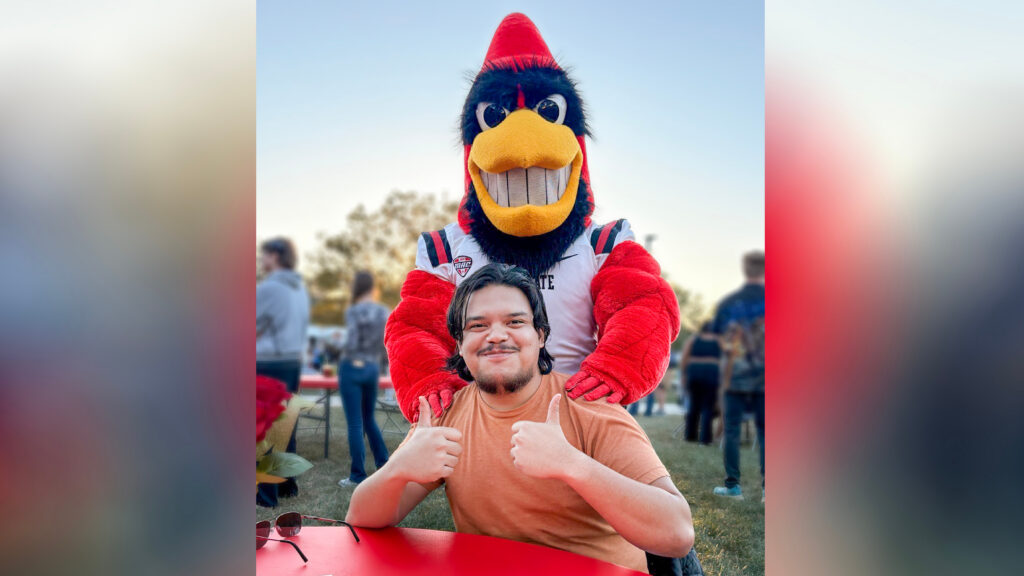
 Sometimes, a single question can change the course of a career.
For Eathan Faust, that question came during a meeting with his supervisor at Rose-Hulman Institute of Technology. He was preparing for another summer with Operation Catapult, a STEM camp for high school students, and had been helping train a new group of counselors.
When his supervisor asked how things were going, Faust didn’t hesitate. He loved mentoring the other counselors. In fact, he told her it felt like the best job he’d ever had.
Her response? “Have you thought about student affairs?”
Until then, Faust had been pursuing a very different future. A mechanical engineering student with a passion for campus leadership, he hadn’t necessarily envisioned a career in higher education. But that conversation helped him recognize something that had been developing throughout his undergraduate experience: the work he found most rewarding wasn’t necessarily engineering. It was helping people grow.
Today, Faust is pursuing his master’s degree in Student Affairs Administration in Higher Education (SAAHE) at Ball State University, preparing for a career built around the kind of mentorship that changed his own life.
From Engineering to Empowering Others
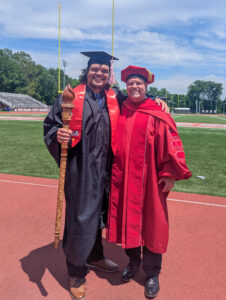 Born in Chicago and raised in Gary, Indiana, alongside four siblings, Faust is a first-generation college student whose academic journey began with a Lilly Endowment Scholarship.
The scholarship allowed him to attend Rose-Hulman Institute of Technology, where he earned his bachelor’s degree in mechanical engineering. But while he was developing his technical skills, he was also discovering a talent for connecting with people.
Faust threw himself into campus life, serving as both president and vice president of the Student Government Association. He also became president of his chapter of Alpha Phi Omega, a gender-inclusive service fraternity, and spent four years working with Operation Catapult, eventually becoming its head counselor.
Those experiences introduced him to the rewards and challenges of student leadership. They also brought him into contact with dedicated student affairs professionals who helped him recognize his potential.
One of those mentors was the supervisor who encouraged him to consider student affairs. A graduate of Ball State’s SAAHE program herself, she demonstrated the kind of leadership Faust hoped to bring to his own career.
He wanted to become the kind of professional who could make students feel supported, challenged, and capable of achieving more than they might have imagined.
That ambition eventually led him to Ball State.
A Small Moment That Made a Big Impression
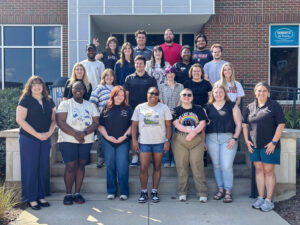
The 2026–27 Student Affairs Administration in Higher Education (SAAHE) master’s cohort poses with program director Dr. Amanda Latz (front row, right) outside Ball State’s Multicultural Center. Eathan Faust is pictured in the back row on the right.
When Faust began exploring graduate programs, he wanted more than an academic experience that would prepare him for a new profession. He wanted to find a community that valued students as individuals.
Ball State’s SAAHE program stood out for both reasons.
Faust believed the program offered exceptional opportunities to learn about the field, but it was a personal interaction during his first interview day that helped solidify his decision.
When Dr. Amanda Latz, the program director, saw his name tag, she immediately recognized him. Before Faust had even introduced himself, she knew who he was because she had taken the time to review his application.
It was a small gesture, but one that carried considerable meaning.
“That care and attention was something that my undergrad really emphasized and so knowing that I would still find that here made my decision that much easier!” Faust shared.
For someone whose professional aspirations were shaped by meaningful relationships, the experience offered an early glimpse of the community he hoped to join.
“So How Did You Get Here?”
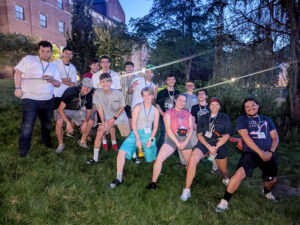 Long before entering graduate school, Faust had developed a habit that would become central to his approach to student affairs: asking questions and listening closely to the answers.
As student government president at Rose-Hulman, he wanted to be approachable. Rather than spending all his time in meetings or behind a desk, he made a point of being visible in public spaces, where he could connect with students and hear their perspectives.
His favorite conversation starter was simple: “So how did you get here?”
The question opened the door to countless stories about the experiences, challenges, and decisions that brought students to Rose-Hulman.
No two answers were alike.
“It really taught me that everyone is their own book with a completely unique plot to them!” Faust reflected.
Those conversations shaped how he understood leadership. Students weren’t simply members of a campus community with shared needs. Each arrived with a different background, perspective, and set of experiences.
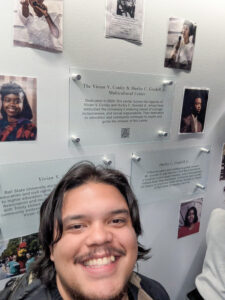
That understanding now influences his work at Ball State, where he serves as a graduate assistant in the Multicultural Center.
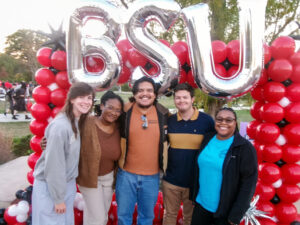 Faust advises the Asian Student Union and Spectrum, Ball State’s LGBTQIA student organization, helping student leaders plan events, navigate challenges, and strengthen their organizations. He has also helped teach REACH (Retain, Engage, Aspire, Connect, and Help), a first-year program designed to support first-generation college students.
His ability to connect with students was evident before he even began the assistantship.
Following his interview, an assistant director contacted him with feedback that stood out: “Out of all of the interviews yours was the only one that students felt comfortable enough to ask questions in.”
The comment reinforced Faust’s belief that he could make a meaningful impact in the department.
Now, his graduate coursework is giving him new ways to understand those connections. In EDHI 602, The Contemporary College Student, he is exploring how students’ backgrounds and experiences shape their development and college journeys.
He sees those lessons reflected in his work as an advisor, where each student requires a different approach to mentorship.
For Faust, getting to know the person behind the leadership role is just as important as helping them succeed in it.
The Work Behind Making a Difference
 Faust’s approach to leadership has never depended on grand gestures.
During his time as student government president, he adopted a philosophy that guided his decisions: “My only goal is to help where I can, however I can do it.”
The statement was intentionally broad. He knew student leadership could be demanding, and the results of that work weren’t always immediately visible.
Unlike an academic assignment with a grade at the end, the impact of student leadership could be difficult to measure. Sometimes, the work meant addressing individual concerns that might never receive public recognition.
But Faust had a straightforward measure of success.
“I knew that as long as I felt I had helped a single student, it would have been all worth it,” he shared.
That commitment took many forms.
After a student survey received more than 500 responses, he was willing to send follow-up emails to see whether he could resolve individual concerns. When a student organization leader needed guidance, he would spend two hours in a meeting helping them work through challenges.
For Faust, those moments weren’t interruptions to the work of student government. They were the reason he wanted to lead.
And while he didn’t always see the results of his efforts immediately, one experience eventually showed him just how far that influence could reach.
An Entire Generation of Students
 When Faust returned to Rose-Hulman for Homecoming, he experienced a moment that put the lasting impact of his work into perspective.
Looking around campus, he realized that many of the students now attending Rose-Hulman had once participated in Operation Catapult. After four summers with the program, he had played a role in introducing an entire generation of students to the university they would eventually call home.
The realization was both humbling and inspiring, offering a glimpse of the impact he hopes to make throughout his career.
“And thinking about it now, that is eventually going to happen through my work in student affairs,” he reflected. “And that’s just really beautiful that I could help so many people find their place and their future!”
For Faust, the experience reinforced something he had been discovering throughout his journey: the influence of a mentor can extend far beyond a single interaction. Sometimes, the greatest reward is recognizing how many lives you’ve helped shape along the way.
“I Guide, I Don’t Shove”
 Despite his commitment to helping students, Faust has a phrase he frequently shares with the student leaders he advises.
“I will never do anything for you.”
It’s a statement that might sound surprising coming from someone whose career is centered on student support. But for Faust, it captures one of the most important lessons he learned from his own mentors.
During his undergraduate years, his advisors didn’t always step in when he encountered difficulties. They allowed him to struggle, evaluate his options, and develop solutions independently.
Those experiences helped him become a more confident leader and strengthened his ability to think critically.
Now, he wants the students he advises to experience that same growth.
Rather than immediately providing answers, Faust helps students work through problems and discover what they’re capable of accomplishing themselves.
That doesn’t mean leaving them without support. He remains involved, offers advice, and helps them identify productive solutions. But he believes the most meaningful development happens when students take ownership of their decisions.
“I guide, I don’t shove,” he explained.
It’s a philosophy that brings together much of what Faust has learned through student government, Operation Catapult, and his graduate assistantship.
His goal isn’t simply to help students overcome their immediate challenges. It’s to help them develop the confidence and skills to face the next challenge on their own.
Building a Future Around People
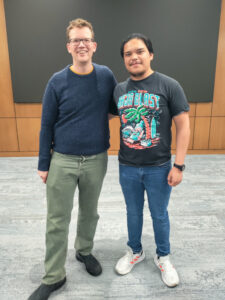 Outside of his graduate studies and work at the Multicultural Center, Faust is finding opportunities to explore his new community.
He enjoys spending time in nature and has been discovering places around Muncie where he can take walks surrounded by greenery. Cooking is another favorite way to unwind, offering a therapeutic break from his academic and professional responsibilities.
As he continues through the SAAHE program, Faust is bringing together the experiences that first sparked his interest in higher education with the knowledge and skills he’s developing at Ball State.
His journey from mechanical engineering to student affairs may not have followed the path he originally imagined, but the experiences along the way have given him a clear sense of what matters most.
He knows firsthand how much difference an encouraging mentor, a thoughtful conversation, or an opportunity to lead can make in a student’s life.
After all, one question from his own mentor helped him envision an entirely different future.
Now, he’s preparing to be the person who asks the next student the question that changes everything.
Comments: