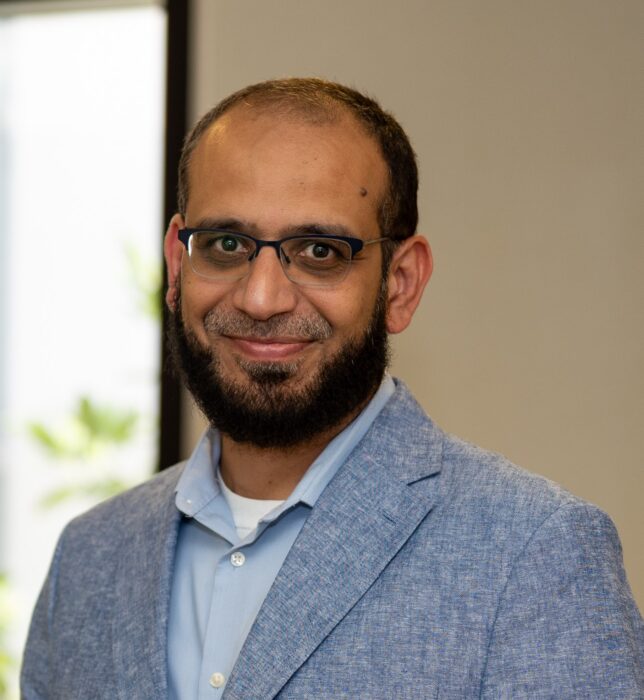
Dr. Faisal Kalota, Assistant Professor in the Center for Information and Communication Science, has 15 years of industry experience in embedded systems, software development, IT strategy & planning, project management, and instructional systems. Additionally, he has over 10 years of combined teaching experience in Computer Information Sciences & Instructional Systems. His areas of interest include: Software Development Education, Human/Computer Interaction (HCI), Analytics, and Project Management. The Graduate School proudly presented Dr. Kalota with the Outstanding Graduate Faculty Mentor Award at the Awards Ceremony in April.
1. What is your mentoring philosophy?
My mentoring approach comes from my values and experiences, and I see it as a way to give back. Mentoring goes beyond the classroom for me. I aim to be available, approachable, and ready to help as students move through their academic, professional, and personal journeys. I work to create an environment where students feel comfortable asking questions, sharing concerns, and seeking advice.
2. What strategies do you employ in your mentoring work?
I use a proactive, student-focused approach. I regularly meet one-on-one with students and often check in to see how they are doing.
I encourage students to consider their short-term and long-term goals beyond their classes. I recommend they take additional steps, such as presenting or publishing their work. For example, in recent years, I have co-authored publications with students and supported them in presenting at conferences such as the IEEE Conferences, the Society for Advancement of Management International Business Conference (SAM-IBC), and the Association for Computing Machinery (ACM) Conference. These experiences have helped them grow both academically and professionally.
My goal is to support students beyond university, helping them consider careers and personal directions. Mentoring allows me to guide them through important decisions in a thoughtful, organized way.
3. What is your proudest achievement in mentoring for your graduate program?
I can’t pick just one moment, since there are many. I am proud of seeing students grow more confident and succeed beyond the classroom. For example, two of my graduate assistants were recognized by our department as outstanding researchers for their innovative projects, and both presented their research at IEEE Conferences.
I value the trust my students place in me and strive to be a reliable resource for them. Sometimes, they schedule back-to-back meetings or frequently ask for advice. I appreciate their comfort in seeking help and take that responsibility seriously.
4. Who has helped you along the way as you have developed your skills in this area?
I am grateful for my mentors, colleagues, family, and friends who have shaped my approach over the years. My own experiences as a student have also influenced how I view mentoring today.
At Ball State University, I have worked with many students from different cohorts. Each interaction provides new insights into their perspectives, challenges, and goals, helping me grow as a mentor. I value all my students and have built especially meaningful connections with many of them, making mentoring rewarding.
5. Anything else you would like us to know?
I am grateful for the support of my family, friends, colleagues, and mentors. My students’ support means a lot to me, and I appreciate their confidence and nominations for awards like the Outstanding Graduate Faculty Mentor Award.
Congratulations, Dr. Kalota!


