
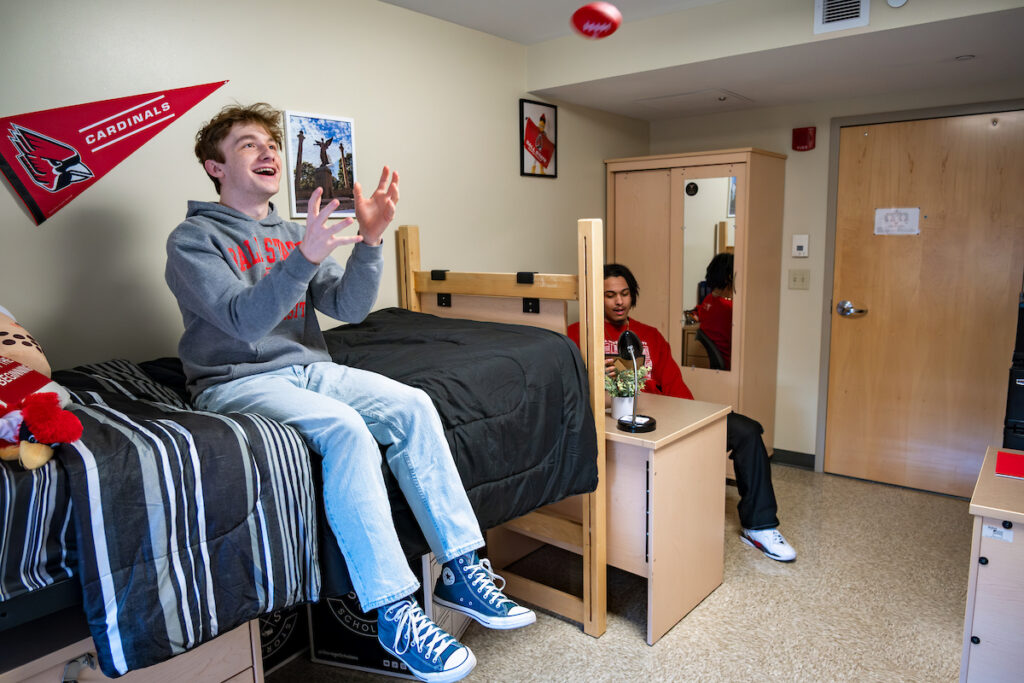
Moving into a college dorm—often referred to as a residence hall—is typically a student’s first experience living on campus. At Ball State University, residence halls are designed to support both academic success and community living. From furnished rooms to shared study spaces, understanding what to expect can help you feel prepared and confident before move-in day.
What Are College Dorm Rooms Like?
Most first-year dorm rooms are shared by two students and come fully furnished. Standard furniture typically includes a Twin XL bed, desk and chair, dresser, closet or wardrobe space, and a trash can for each resident. Many rooms allow beds to be lofted or adjusted to create additional floor space.
Bathroom layouts vary by building. Some residence halls feature semi-private or pod-style bathrooms shared by a small group of residents, while others have community bathrooms shared by the floor. Rooms typically include Wi-Fi, heating, air conditioning where available, overhead lighting, and window coverings.
Types of Residence Hall Rooms
Colleges offer several room types to fit different students and stages of college life.
Standard double rooms are the most common room type, especially for first-year students. Two students share the room, with each having their own bed, desk, dresser, and storage.
Specialty rooms—including singles, triples, studios, and suite-style rooms—offer varying levels of privacy and independence. Suite-style rooms connect two bedrooms with a shared bathroom. These options are often selected by returning students seeking a different living experience.
What Amenities Do College Dorms Have?
College dorm rooms and amenities are designed to make campus living convenient. Wi-Fi and utilities—such as electricity, water, and heating—are included in housing costs. Laundry facilities are located within residence halls and typically operate through quarters or an app-based system.
Shared spaces such as study lounges, common areas, and community kitchens support academic work and everyday living. Some halls also feature Makerspaces and Resource Rooms that give students access to tools for creative and academic projects.
What Should You Bring to a College Dorm?
Start with essentials such as Twin XL bedding, towels, toiletries, a shower caddy, and clothing. Helpful additions include a surge-protected power strip, a desk lamp, storage bins, and organizational supplies. Coordinate with your roommate to avoid bringing duplicate larger items.
Before packing, review your residence hall’s restricted and prohibited items list. Some items, such as small appliances, may be allowed on campus but restricted from use in individual rooms—items like toasters and air fryers often fall into this category. Other items, such as candles and space heaters, are prohibited entirely. Checking this list ahead of time can help you avoid having to send items home after move-in.
Living on Campus at Ball State University
At Ball State, residence hall living is designed with first-year students in mind. First-year students are assigned to a standard double room and will share the space with a roommate, unless they have an approved accommodation through the Office of Disability Services. Bathroom setups vary by hall—most feature semi-private or pod-style bathrooms, while Woodworth Hall has community-style bathrooms shared by the floor.
Specialty rooms—including singles, triples, studios, and suite-style rooms—are reserved for returning students and are not typically available to first-year students without an Office of Disability Services accommodation. All housing applications at Ball State require a meal plan.
Every residence hall at Ball State has an on-site laundry room with machines that operate via quarters or the SpeedQueen app. All halls include a shared kitchen space, study lounges, and common areas. Many halls also feature Makerspaces and Resource Rooms through Ball State’s Living-Learning Communities, offering tools for 3D printing, fabrication, media production, and more.
Students planning to live on campus should complete the housing application through the University’s housing portal. Before applying, review the policies and information page for appliance requirements, prohibited items, and other important guidelines.
Living in a residence hall offers convenience, built-in community, and access to campus resources—helping students settle in and focus on their first year with confidence.


