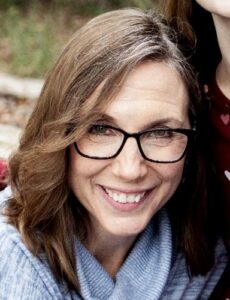
Carrie Steckl
By Carrie Steckl
For years, whenever I heard that one in eight women in the United States will develop breast cancer in her lifetime, I quietly assumed I would be one of the seven who would not. I was wrong.
Today, as a breast cancer survivor approaching the one-year anniversary of my diagnosis, I understand that statistic much differently. I also know that cancer isn’t only experienced by the person with the diagnosis. According to the World Health Organization’s 2026 Global Status Report on Cancer, roughly 92% of people worldwide will be affected by cancer during their lifetime, either through their own diagnosis or that of a close family member.
That reality creates an enormous opportunity, and responsibility, for future professionals in counseling psychology, social psychology, and counseling.
As a 1994 Ball State graduate (my M.A. was a double major in Community Counseling and Applied Gerontology), I was fortunate to learn about wellness through what was then the Fisher Institute for Wellness. The Institute’s whole-person approach stayed with me. Today, Ball State’s whole-person wellness framework encompasses nine dimensions of wellness: physical, emotional, cultural, environmental, financial, intellectual, occupational, social/interpersonal, and spiritual.
My own cancer experience touched nearly every one of them.
I sought counseling after my diagnosis. My counselor helped me process the wide range of emotions, thoughts, and decisions that accompanied surgery, treatment, and conversations with family and friends. But counseling also helped me ask a deeper question: Who am I now, and how do I want to make a difference because this happened to me?
That experience showed me why counseling belongs in the cancer conversation, and why Ball State students are so well-positioned to contribute.
The good news is that much of the foundation is already here. This department offers top-notch clinical training and community-based experiences, while the College of Health provides an extraordinary environment for interprofessional learning, research, and engagement. I was fortunate to experience that commitment firsthand in a recent conversation with Scott Rutledge, Dean of the College of Health, whose leadership and energy around cancer-related opportunities are inspiring. Students and faculty can take advantage of these existing opportunities while also asking what else might be possible, such as more cancer-focused clinical experiences, research on the psychosocial dimensions of cancer and survivorship, community partnerships, support for caregivers and families, or programs addressing disparities in access to screening and treatment.
This last area particularly excites me. Ball State’s commitment to social justice, health equity, and serving communities creates an ideal space for students to explore why cancer outcomes differ across populations, and what counselors and other health professionals can do about it.
Over 30 years ago, Sharon Bowman was one of my professors, soon to become the department chair. Today, she’s still leading the department, and I’m grateful to her for the opportunity to share this reflection with the students and faculty who now call it home.
My hope is simple: Use what Ball State has already built as a springboard. Learn about cancer. Pursue research and seek clinical experiences. Build partnerships. And imagine what you might create that does not yet exist.
Cancer changed my understanding of wellness and deepened my appreciation for the science and art of counseling. Perhaps the next generation of Ball State students can help change what it means to live well with, through, and beyond cancer.
Sources
American Cancer Society. (2026). Key statistics for breast cancer. American Cancer Society
Ball State University, Health Promotion and Advocacy. The Nine Dimensions of Wellness. The Nine Dimensions of Wellness
World Health Organization. (2026). Global status report on cancer 2026: The future we choose together. World Health Organization
About the Author
Carrie Steckl is an e-learning scriptwriter for Nevvon, specializing in instructional writing and e-learning in the fields of health care, mental health, caregiving, and dementia. She’s a 1994 graduate from Ball State’s Department of Counseling Psychology, Social Psychology, and Counseling. She also holds a Ph.D. in counseling psychology from Indiana University, and has worked as a non-profit professional, college instructor, mental health clinician, and Alzheimer’s advocate. On a more personal note, she’s a 6’0” Cubs fan with a 6’9” husband, ever curious daughter, and loyal rescue dog.