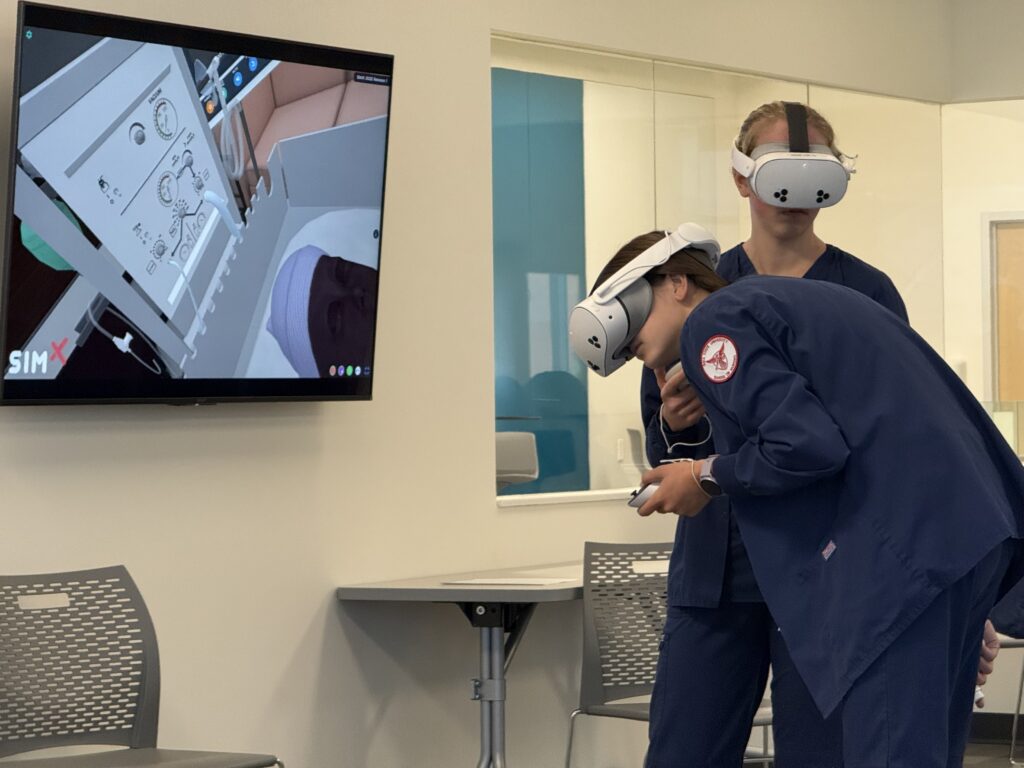
 The simulation team, led by Dani Ely, works to create simulated learning experiences for the College of Health. The team creates experiences with both traditional manikin simulation and virtual reality technology, blending technology and tradition to create an educational environment for students at each level.
In addition to virtual reality technology, the simulation team works to integrate artificial intelligence into the simulation process. The integration allows the team to be more efficient and effective in the creation of the simulations, emphasizing the importance of human review and input.
“I think it’s exciting, I think it’s an opportunity, and I don’t worry that this is going to replace humans, because it requires us to teach it.” Ely said. “Now, it may change the way that the workforce looks a little bit, but you’re always going to have to have the human in the loop for it to stay current, you know, legitimate.”
The human aspect within simulated scenarios is vital in healthcare education, beyond legitimizing what AI generates. Fostering realistic interpersonal communication is a cornerstone in the simulation team’s work.
Creating realistic human interactions in a safe, simulated space allows students to learn by making mistakes in a low-risk environment. One way the simulation team is able to create such environments is by partnering with volunteers, who act as family members of the simulated patient.
Working with volunteers allows faculty to evaluate students from an outside perspective, while simultaneously allowing students to have real feedback from individuals receiving care and interactions.
“We’ve upped the ante, so now they [volunteers] give structured feedback to the students during debriefing, which is so amazing,” Ely said. “So, the volunteer has scripted questions that the faculty read to them, and the volunteer provides their answers like: ‘I observed this’ or ‘when you asked me this question, I felt blank.’”
As technology shifts and continues to improve, the simulation team works hard to balance traditional simulation practices with the advantages provided by technological advancement, keeping College of Health students at the cutting edge of education.