
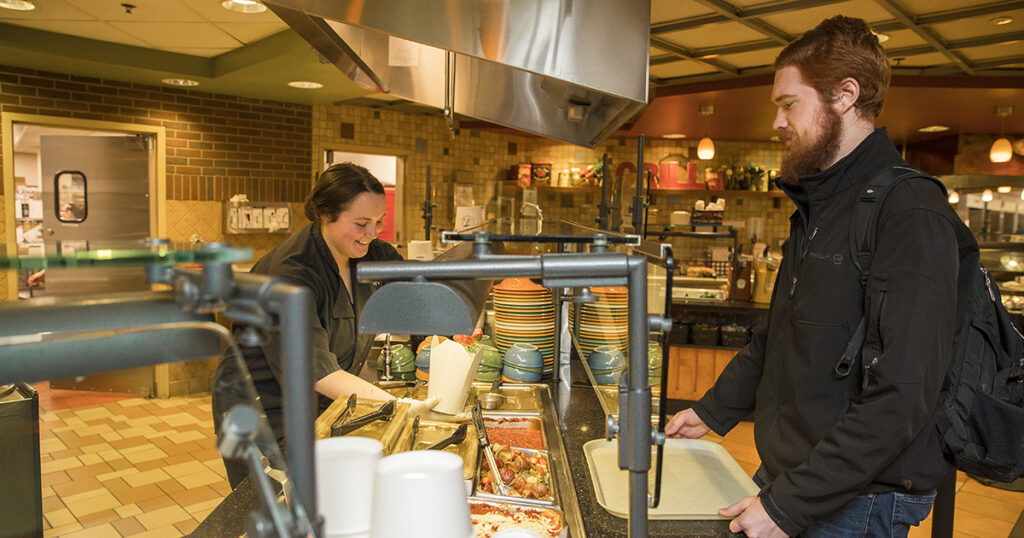
Campus dining comes with its own vocabulary. Terms like “meal plans,” “dining dollars,” and “meal swipes” can feel like a lot to learn before you’ve eaten a single meal on campus. This FAQs section cuts through the confusion by explaining how meal plans work, how to sign up for them, and how to make the most of yours.
The Basics
How do college meal plans work?
A meal plan is a prepaid program that gives you access to meals at on-campus dining halls, typically through your student ID card. Most plans combine meal swipes—which cover full meals at dining halls—with a separate spending balance you can use at cafes, retail shops, and other campus locations. You choose a plan before the semester starts, and the cost is billed alongside your housing.
Ball State Advantage:
- À La Carte Flexibility: Unlike standard college dining hall programs that strictly limit you to set buffet-style entry swipes, Ball State University Dining operates primarily on an à la carte model. Every item is individually priced, allowing you to build your own meal using your meal equivalency allowance or spending funds without feeling like you are wasting a full meal swipe.
- Multiple Spending Options: Students can seamlessly combine weekly meal swipes, Dining Plus (included with on-campus plans), Dining Cash (flexible debit-style funds), and Cardinal Cash on a single student ID card across all dining venues on campus.
What types of meal plans do colleges usually offer?
Comparing different meal plans comes down to a few common structures. Many plans offer a set number of meals per week, often with a few tiers to choose from, depending on how often you plan to eat on campus. Block plans work another way, offering a set number of meals to use anytime throughout the semester rather than resetting weekly. Most plans also pair meal swipes with a smaller flexible spending balance for retail purchases. Which structure fits you best depends on how often you plan to eat on campus and how much flexibility you want.
Ball State Advantage:
- Tailored On-Campus Plans: Ball State offers structured weekly plan tiers (21-Meal, Any-18 Plus, Any-14 Plus, and Any-10 Plus) designed to match specific student schedules and lifestyle habits—whether you eat three full meals a day on campus or go home on weekends.
- Upper-Level Students and Commuter Customization: Returning upper-level students can select the specialized 200-Meal Block Plan for maximum flexibility throughout the semester, while commuter/off-campus students can choose options ranging from the weekly Any-5 Plan to flexible Meal Blocks (25, 50, 75, or 100 meals per academic year).
Signing Up and Changing Your Plan
Where do I sign up for a university dining plan?
You’ll select a meal plan through the same portal you use for housing, often as part of a combined housing and dining contract. Look for it in your student account dashboard or admissions checklist. If a plan isn’t specified, many schools automatically assign a default option.
Ball State Advantage:
- Streamlined Onboarding: Ball State integrates meal plan selection directly into the online housing portal during the residence hall reservation process, ensuring a smooth, single-step sign-up.
- Guaranteed Coverage: If a student forgets to select an option, Ball State automatically assigns the 21-Meal Plan as the default, guaranteeing that every on-campus student has full meal coverage from day one.
Can you change your meal plan after the semester starts?
Usually, yes, but only during a limited window early in the semester. After that window closes, changes are commonly restricted to special circumstances, such as a newly diagnosed dietary need. If you think your plan isn’t the right fit, reach out to dining services as soon as possible to ask about your options and deadlines.
Ball State Advantage:
- Adaptable Financial Tools: Even after formal change deadlines have passed, Ball State students can easily supplement or fine-tune their meal budget mid-semester by adding Dining Cash in any custom amount to cover extra snacks or light-meal weeks without needing a contract overhaul.
Are meal plans required for students living on campus?
Requirements vary, but students living in a residence hall are commonly required to carry a meal plan, with specifics often depending on class year or housing type. Students living off campus tend to have more flexibility and can decide whether to purchase a plan.
Ball State Advantage:
- Comprehensive Community Focus: Requiring a meal plan for all residence hall residents ensures that every student living on campus has consistent access to fresh, high-quality food across 10 campus buildings.
- Off-Campus Convenience: Off-campus students aren’t left out; they enjoy full access to buy dedicated commuter plans or load Dining Cash. While funds from financial aid merit scholarships cannot be used for Dining Cash or the Any-5-Meals commuter meal plan, merit scholarship funds can be used for any of the commuter meal plan Meal Blocks. Visit Financial Aid and Scholarships for more information.
Using Your Meal Plan
What dining options are available on campus?
Campus dining tends to blend several formats—such as dining halls, retail restaurants, cafes, and convenience-style markets—often spread across multiple buildings. You’ll find made-to-order stations, grab-and-go options, and a handful of familiar retail brands alongside dining hall staples.
Ball State Advantage:
- Vast Variety and Scale: Ball State University Dining features more than 30 individual eateries spread across 10 campus buildings, giving students an unmatched variety of options daily.
- Signature Major Hubs: Major dining hubs—including The Atrium, North Dining, Woodworth Dining, and the Tally Food Court—combine made-to-order culinary stations, familiar national and local brands, chef-curated menus, and grab-and-go markets.
Where can I use my meal plan on campus?
Your student ID works as your meal plan card everywhere it’s accepted, from dining halls to cafes to campus convenience stores. Meal swipes cover full meals at dining halls, while your flexible spending balance can be used almost anywhere on campus. Most schools keep an updated list of accepted locations on their dining website or app.
Ball State Advantage:
- Universal Access: Each campus University Dining venue and convenience spot accepts your Ball State student ID card, making spending seamless. This includes national brands like Chick-fil-A, Starbucks, and Taco Bell, as well as the campus’ Ice Cream Shop.
- Real-Time Digital Menus: Ball State utilizes NetNutrition, an online platform accessible via phone or computer, allowing students to check real-time daily menus, locations, and nutritional information across campus at any moment.
Do unused meals or dining dollars roll over?
This depends on the plan and the school, so it’s worth checking the specific terms. Weekly meal plans reset each week in most cases, meaning any leftover swipes don’t carry over to the next one. Flexible spending balances sometimes roll from one semester into the next within the same academic year, but often expire at the end of the year or when you leave the school. Checking your meal swipe balance regularly can help you avoid losing value you’ve already paid for.
Ball State Advantage:
- Fall-to-Spring Flexibility: Any Dining Plus debit balance remaining at the end of the fall semester automatically rolls over to the spring semester and expires at the end of the spring semester.
- Never-Expiring Dining Cash: Unlike standard college programs where funds expire annually, Ball State’s Dining Cash never expires as long as you remain a Ball State student, rolling over every semester until you graduate.
Are there late-night dining options on campus?
Plenty of campuses keep at least one dining location open late in the evening, which comes in handy for late-night study sessions or schedules that don’t align with regular dining hours. Hours vary by location, so check your school’s dining app or website for current late-night options.
Ball State Advantage:
- Late-Night Convenience: Ball State provides dedicated late-night options such as the Tom John Food Shop at Kinghorn Hall, which stays open until midnight most nights to support evening study sessions and late schedules.
Dietary Needs and Accommodations
Are there options for students with food allergies or special dietary needs?
Yes, and this is an area most college dining programs take seriously. Support for allergies, intolerances, religious dietary practices, and preferences like vegetarian or vegan diets is fairly standard these days. Many schools offer dedicated allergen-free stations, detailed nutrition and allergen information online, and the option to meet one-on-one with a dietitian or nutritionist. If you have a medically documented condition, reach out to dining services before you arrive on campus so accommodations can be in place from day one.
Ball State Advantage:
- Dedicated Top-9 Allergen Free Stations: Ball State features two dedicated Top-9 Allergen Free stations (located in North Dining and The Atrium), where meals are prepared safely without the nine most common food allergens.
- Direct Nutritional Support: Students can schedule personalized, one-on-one consultations with Ball State’s full-time wellness nutritionist to build custom meal plans, navigate dietary restrictions, or accommodate specific cultural and religious dietary needs.
- Transparent Ingredient Tracking: Ingredients and full nutrition facts for all items prepared on campus are accessible 24/7 through NetNutrition, allowing students to filter menus by dietary preference or allergen before coming into a dining hall.
Ball State Dining at a Glance
- Scale and Variety: 10 campus buildings, 30-plus eateries, and four major dining hubs.
- Flexibility: À la carte pricing with non-expiring Dining Cash that carries over until graduation.
- Late-Night and Convenience: Hot food and grab-and-go area, open until midnight, at Tom John Food Shop.
- Dietary Safety: Dedicated Top-9 Allergen Free stations and 24/7 menu tracking via NetNutrition.
Are you ready to explore Ball State Dining?
Whether choosing your first meal plan, checking today’s menus, or looking for specific dietary accommodations, we’re here to help you make the most of your campus dining experience.
- Explore Daily Menus and Ingredients: Filter by allergen or preference on NetNutrition.
- Compare Meal Plan Rates: Find the right fit for your schedule on the Meal Plan webpage.
- Schedule a Nutrition Consultation: Connect one-on-one with our wellness nutritionist.
With the variety of dining halls, the flexibility of Dining Plus and Dining Cash, and real support for dietary needs, most students find campus dining easy to navigate with little trial and error.


