
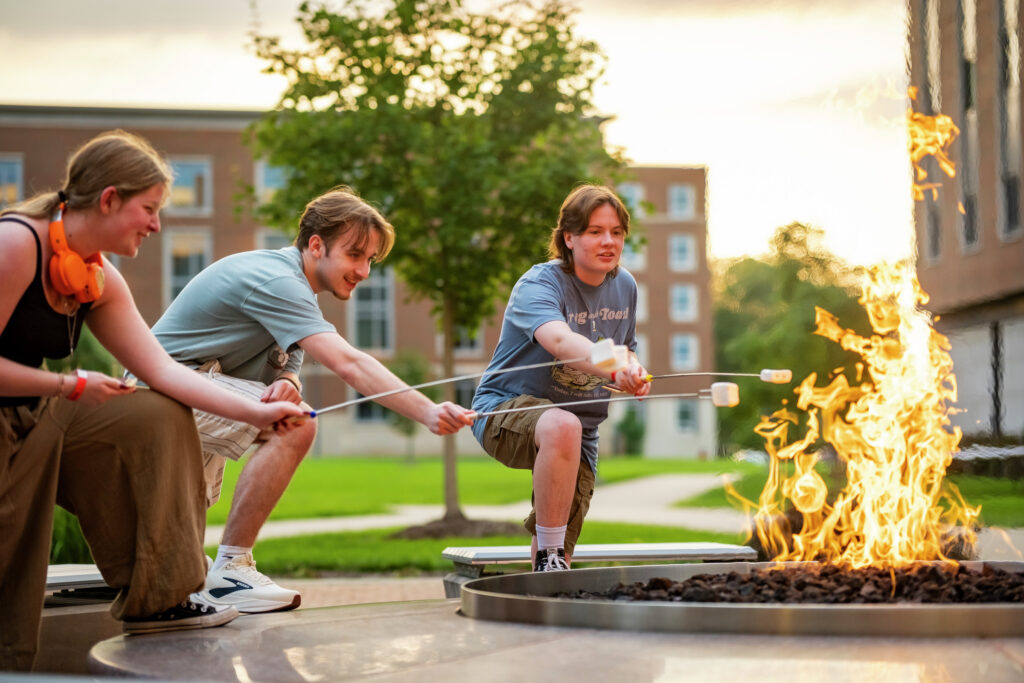
Choosing where and how to learn is a personal decision, and there are many ways to pursue an education today. For students who choose a traditional on-campus experience, much of the value comes simply from being there. Meeting with an advisor face-to-face, walking into a lab, showing up to a campus event—these are the small, physical moments where the real value of on-campus learning takes shape.
In-Person Advising and Mentorship
Sitting across from an advisor in their office tends to open up a different kind of conversation than a scheduled call. You can ask a follow-up question the moment it occurs to you, read the room, and leave with a plan that feels like it was built for you.
The same goes for faculty. Stopping by to talk to them during their office hours, catching a professor after class, or running into a mentor on the way to your next class all create small, repeated touchpoints that add up to a real relationship over time. Those relationships often lead to recommendation letters, research opportunities, and career advice that starts well before graduation.
Campus Events and Traditions
Being on campus means you’re there for the things that only happen once, in that place, at that moment. A guest speaker, a rivalry game, a block party with food trucks and live music—these are shared experiences that build a sense of belonging with everyone who shows up, growing stronger with every event you attend.
Campus traditions add another layer. The same events happening year after year give students something to look forward to and something to belong to, a shared calendar that connects one class of students to the next.
Hands-On and Immersive Learning
Some of the most valuable learning happens in spaces like a lab, a studio, a research bench, or a rehearsal hall. Being physically present means you can troubleshoot equipment with a professor standing right next to you, or get immediate, specific feedback on work in progress.
Immersive, hands-on projects also tend to involve real community partners, real deadlines, and real materials, all of which are easier to coordinate when everyone involved can meet in the same room.
Spontaneous Community
Some of the best parts of college aren’t scheduled. A hallway conversation before class turns into a study group. A conversation in a dining hall turns into a friendship. Living near your classmates means community happens in the in-between moments, not just the planned ones.
That kind of spontaneous connection is hard to plan for because it happens naturally, when people share a physical space day after day.
Career Support You Can Experience in Person
Career fairs, mock interviews, and networking events carry extra weight when they happen face-to-face. A handshake, a genuine conversation, and the ability to read an employer’s reaction in real time can make a lasting impression.
Being on campus also means you’re close to the people who can help—including career coaches, alumni visiting for events, and employers who show up in person specifically to meet students like you.
These benefits don’t happen on their own; they build on each other. The advising relationships, shared traditions, hands-on learning, the spontaneous community, and the in-person career support add up. That’s what makes an on-campus experience feel like more than the sum of its classes.
The Value of an On-Campus Degree at Ball State University
Ball State University brings each of these pieces to life directly. Every student is assigned an academic advisor, and Academic Advising is located in North Quad, giving students a real place to walk in, ask questions, and get to know someone who understands their academic path. Faculty adds another layer. They offer regular office hours when students can ask questions face-to-face and build relationships.
Career preparation happens in person, too, through the Career Center, which was recently recognized nationally with the Career Services Pursuit of Excellence Award from the Career Leadership Collective. The center offers career coaching, resume and interview help, and in-person events like the Cardinal Job Fairs that connect students directly with employers. The Career Center’s Indiana Connection Lounge gives students a dedicated, in-person space to build relationships with alumni and employers outside a typical job fair setting.
Academically, programs like Immersive Learning connect coursework to real community projects. Students work alongside faculty mentors and community partners in person, well before they graduate.
Campus life brings the community piece to life in a big way. Ball State has more than 400 student organizations, along with a Fraternity and Sorority Life community of more than 2,000 members built around academic growth, philanthropy, and lifelong friendships. Students give back in a big way, too, logging 60,000 volunteer service hours in a single year. Homecoming alone brings the whole campus together in person, with events and activities such as Air Jam, the university’s popular lip-sync competition running since 1987; and the Bed Race, a tradition that’s been running since 1980. With Emens Auditorium, the David Owsley Museum of Art, and a full calendar of theatre, dance, and music performances, there’s no shortage of in-person events to be part of. That sense of community extends beyond campus, as well. Muncie is home to spots like Minnetrista and the Cardinal Greenway trail. The Indiana Chamber of Commerce has twice recognized Muncie as a Community of the Year.
All of this happens within a close, connected setting. With about 17,000 on-campus students, Ball State University is large enough to offer real opportunities and small enough that you’re never just a face in the crowd.


